Available now!
Dreaming of Wolves: Adventures in the Carpathian Mountains of Transylvania
The Status of the Wolf
 Red Wolves
The Status of the Wolf - 7. Red Wolves
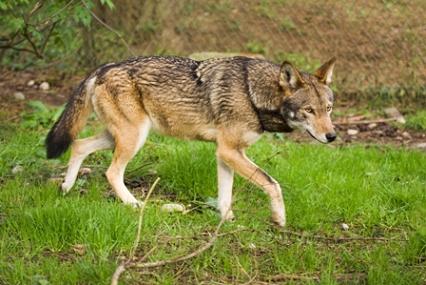 |
| © Brad McPhee |
Note: This article includes a summary of the recent history of the legal and ecological status of the red wolf. This is a complex story - although I've tried to be concise, I've also tried to be thorough. Those wishing to read only a brief synopsis of the most recent status (updated October 2012) are welcome to skip ahead to the Current Status section.
The red wolf of the Southeastern United States is currently considered by most taxonomists as well as the U.S. Fish and Wildlife Service (under the auspices of the Endangered Species Act) to be a species of wolf, Canis rufus, distinct from the gray wolf, Canis lupus [1]. As a unique type of wolf it is one of the most endangered mammals on the planet. Similar in size to the Mexican wolf (see Part 6: The Mexican Gray Wolf), the red wolf is somewhat smaller than most gray wolves, adults averaging between 50 and 80 lbs (about the size of German shepherd dogs). Also like Mexican wolves, red wolves tend to form smaller packs than most other wolves, usually with between two and eight members, although pack size is highly dependent on prey availability. While there are some significant differences, there are also several parallels between the recent history and current status of these two small wolves in the United States. Both wolves were almost entirely extirpated from the wild, necessitating the capture of the last few survivors in order to ensure their survival, and today both wolves live in the wild only as small, intensely managed populations.
Compared to most gray wolves, red wolves have proportionally longer legs, smaller feet, more slender bodies, shorter fur, narrower muzzles, and larger ears – characteristics which are generally more appropriate for a warmer climate. They share some of these features with Mexican wolves, but upon seeing the two wolves (or photos of them) together one can readily tell the difference. The shape of the face and the longer ears of red wolves are distinctive, as is their coloration, which features a reddish tint especially on the head, around and behind their ears, and on the outer sides and fronts of their forelegs and outer sides and backs of their hind legs. While there is some controversy regarding the taxonomic classification of red wolves as a species separate from gray wolves [1], genetic research has been deemed by most experts to support the distinction since about 1980. As a separate species, the USFWS’s recovery plan for red wolves has goals that are independent of the status of gray wolf populations.
It is believed that prior to European settlement red wolves ranged the entire Southeastern United States, from southern New England (at least [2]) to Florida along the coast and ranging as far west as Indiana in the north and eastern Texas in the south. Exactly how far north they ranged is unknown and wrapped up with the taxonomic issue of precisely what is a red wolf [1]. But regardless of their exact range, red wolves were an apex predator throughout. Today they are limited to an area of 1.7 million acres of public and private land on the Albemarle Peninsula in northeastern North Carolina, where, adapting to the specific ecological conditions (as wolves usually do), they prey mostly on white tailed deer (50% of their diet), raccoons (30%), and rodents and rabbits (20%) [3]. Studies have shown that adult red wolves consume about two to five pounds of food daily, on average.
The story of the near extinction of the red wolf shares familiar features with what occurred in the lower 48 states for the gray wolf, especially with regard to human persecution. Like other wolves, red wolves were subject to intense predator control programs and bounties. But the red wolf faced two additional hazards: (1) relatively greater habitat destruction in the more densely settled area of its range; (2) a greater tendency to interbreed with coyotes than most gray wolves. Coyotes did not inhabit the eastern US at the time European settlement began, but for various reasons they manage to better survive the persecutions and conditions created by humans, successfully living and breeding in suburban and even some urban areas, and as wolves were eliminated, coyotes stepped in, migrating gradually from west to east [4]. When red wolf population densities decline, it becomes more difficult for lone wolves to find other lone wolves to mate with, and pairings with coyotes increase [5]. As more hybrids populate the dwindling habitat, there is even less space for pure red wolves, an even a greater tendency to interbreed with coyotes, and thus begins a spiral towards genetic extinction.
By the late 1960s, the situation for the red wolf was dire. Unlike gray wolves, which still occurred in robust populations in Canada, Alaska, parts of Eastern Europe, and Russia, the red wolves of the southeastern United States were all there were [6], and the only red wolves known to exist in the wild were limited to a stretch of swampy, marginal habitat along the Gulf Coast of Louisiana and eastern Texas. After the passage of the Endangered Species Act in 1973, there seemed only one hope to save the red wolf: remove the few remaining wolves from the wild and place them in a captive breeding program. Over 400 animals were trapped between 1974 and 1980, but only seventeen were found to be pure red wolves based on morphological characteristics. Fourteen of these wolves were deemed appropriate for the captive breeding program, and in 1980 the red wolf was declared extinct in the wild.
The first red wolf litter was born in the breeding program in 1977, and in 1978 the USFWS tried an experimental release of a male-female pair of red wolves on Bulls Island off the South Carolina coast (part of Cape Romain National Wildlife Refuge), where it was hoped that dangers would be minimized. Being the very first attempt to reintroduce into the wild a formerly extinct predator, no one knew the best procedures and whether wolves born in captivity could fend for themselves. But the pioneer wolves managed to survive, and after nine months the experiment was deemed a success. The wolves were then recaptured so the results of the experiment could be analyzed and used to design a more significant and enduring reintroduction somewhere on the mainland.
In 1982 the Red Wolf Recovery Plan was developed, and it was revised and approved in 1984. Red wolves released into the Southeast would be classified as experimental, non-essential populations, allowing more flexible management options under the Endangered Species Act, (as would happen later with reintroduced gray wolves in the Southwest and Northern Rocky Mountain regions). The captive breeding program was expanded to include several facilities within the American Zoological Association’s Species Survival Plan, and then the search was on to find a site or sites that would be best suited for the survival of red wolves.
Due to the human population density of eastern states and the ubiquitousness of coyotes, finding suitable sites was not easy, but in 1984 an opportunity was created when the Prudential Insurance Company donated to public trust 118,000 acres on the Albemarle Peninsula of northeastern North Carolina – which became the Alligator River National Wildlife Refuge (which has since expanded through land purchases to about 152,000 acres). Containing forests and marshlands (and a military bombing range), with about half the area consisting of pocosin habitat [7], human population, livestock, and road density were low, prey density was high, and it was hoped that a peninsula could help isolate wolves from expanding coyote populations. A public education program was initiated along with public meetings to facilitate local support. Then, in 1987, four pairs of red wolves were released into the ARNWR. Meanwhile, an acclimation site was established on Bulls Island to facilitate future releases. The island propagation program, where wolves can adjust to conditions similar to the release area while they roam relatively freely, was eventually expanded to include three more islands: Horn Island off the Mississippi coast, and St. Vincent and Cape St. George Islands off the Florida coast (Horn Island has since been dropped because of too much potential for interaction with humans).
After the initial release in 1987, developments on the ground proceeded quickly. Within a year a pair of red wolves produced the first litter of pups born in the wild since the species had been declared extinct eight years earlier. In 1989 two pairs of wolves were released at a second reintroduction site in Great Smoky Mountains National Park. In 1991, a second generation of pups was born in ARNWR. In 1992 more red wolves were released near ARNWR, in Pocosin Lakes National Wildlife Refuge, and the first litter of pups was born in GSMNP.
Meanwhile the Red Wolf Recovery Plan was being revised with input from scientists and stakeholders. Finalized in 1990, the plan included the following goals: At least 220 wolves living in the wild in at least three self-sustaining populations; maintain a population of at least 330 red wolves in the captive breeding program; preserve 80% to 90% of red wolf genetic diversity for 150 years; and maintain a genetic base indefinitely through embryo banking and cryogenics [8]. With a management plan in place and with additional releases of wolves, the population in northeastern North Carolina gradually expanded and by the late 1990s was approaching one hundred wolves. The wolves in the Great Smoky Mountains National Park were not doing so well, however. Most pups were not surviving due to disease, predation, malnutrition and parasites, and many wolves weren’t staying in the park, probably due to low prey density. Of thirty-seven wolves released into the park between 1992 and 1996, twenty-six had died or had to be removed for straying out of the park. In 1998 the GSMNP Red Wolf reintroduction project was cancelled; the four remaining wolves were removed from the park and relocated to the North Carolina recovery area.
The red wolf restoration area in North Carolina eventually expanded through federal purchases of land and agreements with private landowners, and now consists of about 1.7 million acres on the Albemarle Peninsula and adjoining areas across the Pamlico Sound to the south. The area contains three national wildlife refuges (Alligator River, Pocosin Lakes, and Mattamuskeet), although over 60% of the area is privately owned. In recent years the red wolf population in this one area has been fairly stable, but at only around 100 wolves the population of red wolves in the wild is well short of the recovery plan goal of at least 220 wolves living in at least three recovery areas, and significant challenges remain for the Red Wolf Recovery Program.
While surveys have shown broad public support for red wolf recovery, and conflicts with human interests due to livestock and pet depredation is minimal in the red wolf recovery area, human attitudes and actions continue to have a major impact on wolf survival. Between 1999 and 2006, gunshot mortality accounted for about 25% of the known causes of red wolf deaths, vehicle collisions accounted for about 16%, legal removal accounted for about 15% [11], and illegal poisonings/trappings accounted for about 6% [12]. The final quarter of the year is often especially dangerous for red wolves in North Carolina, as it includes the rifle hunting season for deer. Between four and six gunshot mortalities of red wolves have occurred annually during the fourth quarter since 2005. Some of these are cases in which hunters mistake red wolves for coyotes (for which there is no closed season in North Carolina), and program managers are conducting hunter education programs including the distribution of a hunter education card. On the other hand, even though there is no evidence to suggest that red wolves have had a significant negative impact on the white-tailed deer population on or around the Albemarle Peninsula [10], some hunters think that red wolves pose a threat to the deer population and some killings are believed to be intentional. A reward of up to $15,000 is currently being offered for information leading to the arrest and successful prosecution of whoever was responsible for recent shooting deaths of several red wolves in North Carolina (funded in part by private organizations and individuals) and most recently there is a specific award of $2500 being offered for assistance in the investigation of a radio-collared wolf that was found shot on September 4, 2012.
While human activity is considered a major factor limiting the expansion of the wild red wolf population [8], the most significant threat to the long-term recovery of red wolves may be coyote hybridization. Coyotes began moving into the recovery area in the 1990s (some were intentionally transported into the region to train fox hunting dogs, and either escaped or were released), and intensive management is in place to keep the two species apart. Any coyotes found living in certain zones around core red wolf habitat are trapped and sterilized and then left in place until wolves start to move in; they are then removed. And any coyotes found to be breeding with wolves are also captured and either sterilized and radio-collared, or removed, and all pups of hybrid litters are euthanized.
In addition to the threat from coyote hybridization and human caused mortality, the small population living in the wild is constantly subject to the possibility of being wiped out by a hurricane or a disease epidemic. Other concerns include habitat fragmentation from development of the inner coastal region and the potential effects on red wolf survivability of a rise in sea-level from climate change.
Current Status of Red Wolves (updated October 2012)
The population of red wolves peaked in 2001 at 131, dipped in the mid 2000s to around 114, and as of June 2012 was estimated to be between 100 and 120 wolves, in 15 packs with 13 breeding pairs, 8 mixed packs (a pack with a breeding pair consisting of one wolf and one coyote), and at least 16 lone wolves [9].
Illegal and accidental shootings of red wolves are still a significant threat to the viability of the wild red wolf population. During the last quarter of 2011, of nine known wolf mortalities, seven were suspected to be the result of illegal shootings [9]. There is also concern that a temporary change in hunting regulations instituted by the N.C. Wildlife Resources Commission in that allows nighttime hunting of coyotes with spotlights throughout North Carolina, which began on August 1, 2012 and is to last 270 days, will lead to greater accidental red wolf shootings. The Commission instituted the rule temporarily while they pursue a process required by state law to address objections that were raised during a public comment period for the proposed permanent change. A lawsuit has been filed to block the temporary rule by a coalition of conservation groups who claim it violates the procedures required by state law to institute a new rule.
The Red Wolf Species Survival Plan now includes 40 captive breeding facilities with about 178 wolves (as of December 2011). As with the Mexican wolf, pairings are arranged in order to maximize genetic diversity – a challenge since the population is descended from only 14 wolves. A fostering technique has been developed that helps enhance genetic diversity as well as the number of wolves in the wild wherein wolf pups born in captivity are placed with wild wolf parents already rearing a litter. It has been found that the parents accept the introduced pups and raise them as their own.
Today, the small population of red wolves in northeastern North Carolina clings to survival under the constant management of wildlife officials, with the vital assistance of a private, non-profit organization called the Red Wolf Coalition. The RWC works to promote public support for red wolf recovery and to foster co-existence between humans and wolves by providing public education programs about the biology, ecology, and value of red wolves, by involving people in the conservation of red wolves, and by bringing economic benefits to the local people of the region. To enhance the latter, the RWC is working to establish a Red Wolf Center which would give people an opportunity to see live red wolves (difficult in the forests of the Southeast) and to learn about them through entertaining, interactive exhibits. As of June 2012 a wolf enclosure was completed.
A study at Cornell University in 1997 found that 70% of people surveyed in an eight-state region in and around potential red wolf recovery areas would be interested in visiting a recovery area to see or hear red wolves. The authors estimated that the resulting tourism could bring in up to $37.5 million per year for eastern North Carolina and $132.1 million around Great Smoky Mountain National Park [13]. Another study conducted in 2005 by Ursa International for Defender’s of Wildlife documented the large positive impact a Red Wolf Center could have on the economy of the Albemarle Peninsula Region [14].
As with the return of gray wolves to the upper Midwest, the Northern Rockies, and the Southwest
regions of the lower 48 states, the return of red wolves to the Southeast has ecological
consequences. Ecosystems that evolved for millennia are thrown out of balance when the most important
apex predator is eliminated. The presence of red wolves likely helps restore a more diverse,
historically typical mix of plant and animal species to the landscape. Evidence suggests, for
example, that sea turtles (on the island propagation sites) benefit as a result of the pressure
that wolves put on raccoons. Ground nesting birds are likely to benefit as well. Red wolves may
also help reduce crop damage, over-browsing by deer, rabbits, and rodents, and the damage to
marshland ecosystems and levee, road, and farm equipment caused by non-native nutria [15].
And they may enhance the health and evolution of white-tailed deer and other prey populations
by exerting selection pressure against maladapted and sick individuals (perhaps before they
can further spread diseases).
[This article is current as of October, 2012. The status of
wolves in the United States is changing rapidly. Updates may occasionally be provided.]
FOOTNOTES
-
The taxonomy of wolves is complex and not without controversy, and it changes with continuing research
and shifting ideas about what exactly defines a species. Some scientists suspect that the common
ancestor of red wolves, gray wolves, and coyotes – a species existing on the North American
continent some one to two million years ago – more closely resembled today’s coyotes. The current
most widely accepted theory posits that the branch that evolved into gray wolves did so after
migrating to Eurasia, some of which then migrated back to North America. Meanwhile the animals
that remained in North America evolved into today’s red wolves (and possibly also the
lycaonwolves, see below) and coyotes (Canis latrans),
separating some 150,000 – 300,000 years ago. Red wolves did not diverge as much as gray wolves from
the branch that evolved into coyotes – thus red wolves and coyotes share more genes and are more
likely to interbreed. An alternative theory has the branch that led to red wolves splitting
from the Eurasian line and being one of the earliest waves of wolves to migrate back to North America.
The smallish “Eastern” wolf originally inhabiting southern Ontario and Quebec and probably northwestern New York, and now only occurring in Algonquin Park in Canada, which are currently most commonly classified as a subspecies of gray wolf (Canis lupus lycaon), are genetically closer and more morphologically similar to red wolves than are other gray wolf subspecies. Some argue that lycaon wolves should be considered a separate species that descended from the common ancestor on the North American continent, and this position was given more weight by a US Fish and Wildlife Service ruling in 2011 that designated the Eastern Wolf as a distinct species (but a subsequent ruling, in December 2011, due to the resulting controversy, deferred the distinction pending more research); and some argue that lycaon and red wolves should together be considered the same species. But whatever the specifics of human classification, morphological and genetic evidence suggests that these eastern wolves are either gray wolves that had some hybridization with red wolves, or they are red wolves (which may be lycaon wolves) that had some hybridization with gray wolves – with a few coyotes probably thrown into the mix as well (see footnote 4).
Yet another theory suggests that the red wolf is merely a hybrid between the gray wolf and the coyote. This theory has been used by opponents to try to legally block the recovery program for red wolves, but most experts discount this theory based on recent genetic and morphological research, and on fossil evidence and historical references from the early period of European settlement that establish the long-term existence of red wolves. - Some evidence suggests the red wolf may have extended as far northeast as Maine and eastern Canada.
- Including nutria, also known as coypu – a large semi-aquatic rodent which became a pest and threat to natural marshland ecosystems after it was introduced in the early 1900’s from South America.
- Many Eastern coyotes are probably not pure coyotes. A study found that 22% of coyotes in Maine carried at least 50% wolf genes. This is probably why Eastern coyotes tend to be larger than their Western counterparts. It is theorized that coyotes occasionally interbred with wolves as they migrated east.
- Regarding interbreeding between wolves and coyotes, while there are controversies, some conflicting evidence, and possible exceptions: (1) Cases of interbreeding most often involve a male wolf and a female coyote. (2) The large gray wolves of the Northern Rockies are generally antagonistic towards coyotes and are not known to interbreed with them. (3) Genetic evidence suggests that some Mexican gray wolves have interbred with coyotes on rare occasions. (4) Genetic evidence suggests that some gray wolves in the Western Great Lakes region interbred with coyotes when the wolves of this area declined to very low numbers under strong pressure from humans. (5) The “Eastern wolf” of southern Quebec and southeastern Ontario Canada (Canis lupus lycaon) and the red wolf share some genes and morphological traits with coyotes (especially eastern coyotes, which tend to carry some wolf genes); these wolves will sometimes interbreed with coyotes when they cannot find a wolf to mate with. (6) Gray wolves of the Western Great Lakes Region may occasionally interbreed with lycaon wolves, thus acquiring some coyote genes indirectly.
- Unless the wolves of the Algonquin Park in Canada are also red wolves – see footnote [1].
- Pocosin is a type of wetland with acidic, relatively nutrient poor, sand-peat soils. They are often covered with shrubs and/or pine, cypress, and cedar trees. Much of the Albemarle Peninsula is owned by timber companies and agricultural interests.
- USFWS Red Wolf 5-Year Status Review
- There were 75 “known” wolves (i.e., regularly monitored wolves). USFWS Red Wolf Project 3rd Quarter Report, April – June 2012
- Studies of the impact of the reintroduced red wolves on the white-tailed deer population have not been conducted, although there are anecdotal reports from some landowners of “healthier and larger deer populations” since red wolves were reintroduced. As of 2010, there are an estimated 1.1 million white-tailed deer in North Carolina (this compares with an estimated 10,000 in 1900). The population was increasing until the early 1990s when more liberalized hunting policies allowed larger harvests; it has since stabilized and is declining slightly to what is probably a more sustainable and balanced level. http://www.ncwildlife.org/Wildlife_Species_Con/WSC_Deer.htm
- Under the rules for the recovery program, red wolves may be legally killed “…which constitute a demonstrable threat to human safety or livestock, provided it has not been possible to eliminate such threat by live capture and relocation of the wolf.” [7]
- Data is from [7], normalized to take out “unknown” causes of wolf losses.
- http://www.news.cornell.edu/releases/March97/redwolf.hrs.html
- http://www.defenders.org/resources/publications/programs_and_policy/wildlife_conservation/imperiled_species/wolf/southeast_wolf/red_wolves_creating_economic_opportunity_through_ecotourism_in_rural_north_carolina.pdf
- The Value of Red Wolf Conservation, compiled by the Red Wolf Coalition.
© 2012. Alan E. Sparks. All rights reserved.